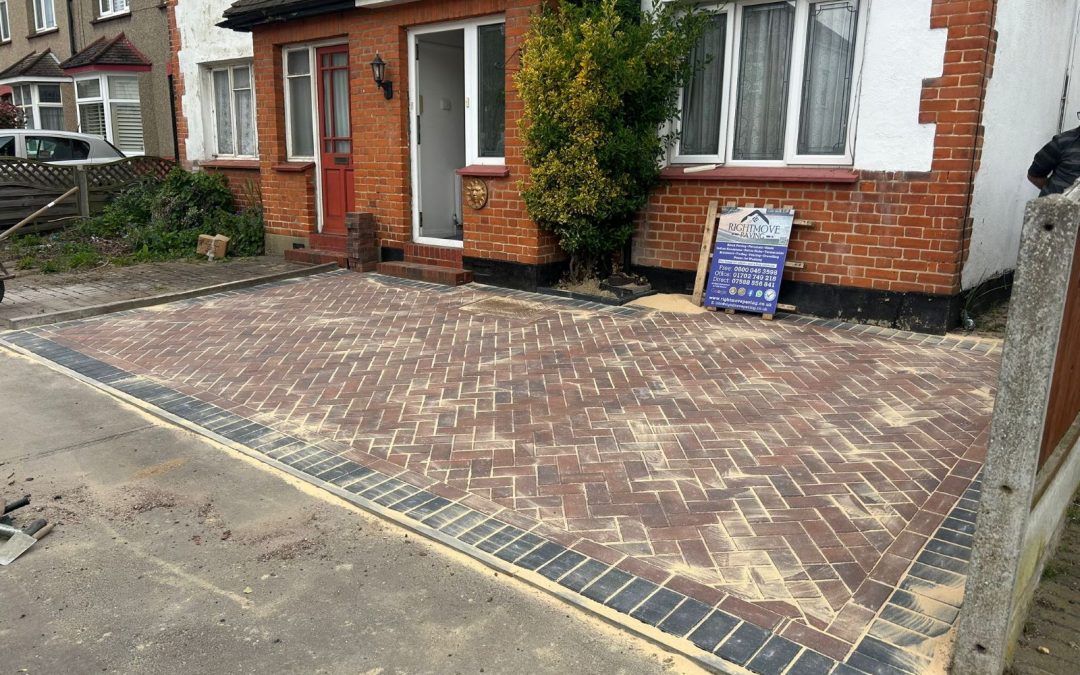
Block paving isn’t just functional – the pattern you choose dramatically shapes the look and strength of your driveway or patio. A carefully selected block paving design can boost your home’s kerb appeal, complement its architecture, and even add value. In fact, research has shown that homes with strong curb appeal – including an inviting driveway and tidy exterior – sell for around 7% more than similar properties. For homeowners in Rochford, getting the pattern right is especially important: as local paving contractors, Rightmove Paving often sees how a great driveway transforms a home’s entrance. In this guide we’ll explore popular pattern ideas, design tips, and practical advice (based on real experience and expert sources) to help you pick the perfect block paving style. Ready to revamp your front yard? Read on, or contact us at Rightmove Paving in Rochford for a free quote and local advice.
Why Block Paving Patterns Matter for Your Home Exterior
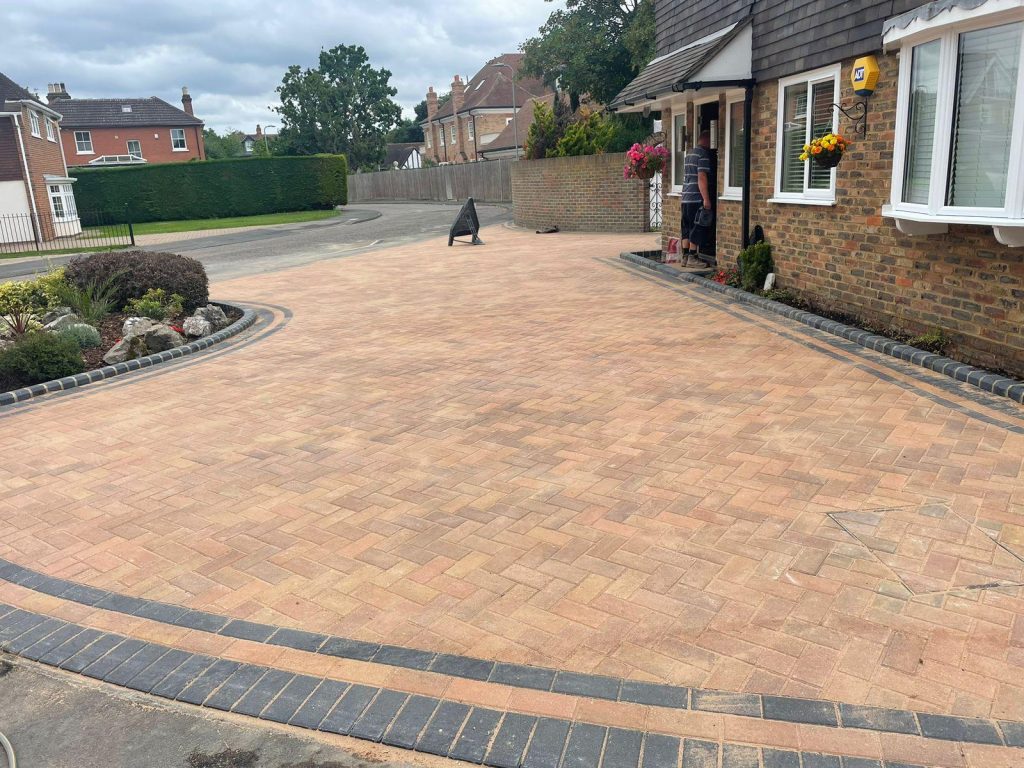
A paving pattern sets the tone and strength of your outdoor space. The layout affects not only aesthetics, but also load distribution and drainage. The right pattern can create visual interest – for example, a diagonal herringbone can make a narrow driveway look longer – while the wrong one might clash with your home’s style or even fail under heavy use. Well-laid patterns also minimise maintenance issues: properly oriented blocks help channel water to joint sand or permeable joints, reducing pooling or erosion.
Good curb appeal starts with the driveway. A University of Texas study found that tidy, well-designed exteriors with inviting entryways allow homes to command higher prices. This means that a block paving pattern isn’t just decorative – it is part of your home’s first impression. A neat, coherent pattern signals care and quality; the research notes that buyers often assume a well-kept exterior means a well-kept interior. In Rochford’s competitive market, even local homeowners notice when a driveway complements their house. Rightmove Paving emphasises this in our designs. As one Rochford client put it, “Our new block paved driveway looks stunning and matches our house perfectly. It really changed the look of our home.”
Besides looks, interlocking patterns influence durability. Strong interlock – how blocks brace each other under load – is provided by certain patterns. Civil engineering tests have confirmed that herringbone patterns give the best load dispersion among common layouts. This means a 90° herringbone can better handle the weight and turning forces of cars. Professional installation guides also note that herringbone “provides the strongest interlock”. By contrast, simpler stretcher-bond patterns (straight running courses) may require edging or thicker bases to be as robust.
Finally, patterns play a role in home drainage and planning. In England, any new hard landscaping over 5 m² in a front garden must be permeable or accompanied by drainage. Many block paving options (especially with proper jointing sand or sub-base) satisfy this rule. When choosing a design, ensure it can be laid with permeable joints or opengrained stone, as required by current building regulations.
Most Popular Block Paving Patterns Explained
When it comes to drives and patios, some patterns stand out for their appearance and performance. Here are five common options:
- Herringbone Pattern: Key strength and durability. Herringbone is a zig-zag pattern (laid at 45° or 90°) where each block is interlocked at a right angle with its neighbour. This interlock makes it strongest under traffic, which is why it’s the go-to for driveways. Installation guides specifically recommend 90° herringbone to “keep cutting to a minimum” while preserving strength. Research confirms herringbone gives the best load dispersal among typical patterns. Visually, it lends a classic, dynamic look that suits both traditional and modern homes.
- Basketweave Pattern: Classic and symmetrical. In basketweave, blocks alternate between vertical and horizontal pairs, creating a checker-like effect. It’s a charming traditional look, often seen in older homes and patios. Basketweave is best for pedestrian areas or low-traffic driveways. It’s less interlocked than herringbone, so it’s not ideal for heavy load areas without extra edge support. However, its regular appearance can add a quaint, crafted feel to small front gardens or garden paths. For example, many Devon and Cotswold cottages use sand-coloured blocks in basketweave to complement stonework.
A block paving driveway in a classic basketweave layout. This pattern works well for decorative patios or light-driveway use, pairing blocks in vertical and horizontal sets.
- Stretcher Bond Pattern: Simple and cost-effective. Also called “running bond,” stretcher bond is like traditional brickwork: each row of blocks is laid straight, with joints usually offset by half a block (the offset stretcher bond). It’s quick to lay and uses fewer cuts, so it’s often cheaper. This pattern suits garden paths, patios, or sections of driveways where traffic is light. However, by itself it has weak interlock – ideally it should run perpendicular to traffic or be combined with a strong edge restraint. Stretcher bond can also be laid “single stretcher” (directly aligned joints) for a contemporary linear effect, though this sacrifices even more interlock.
- Circular or Curved Patterns: Visual feature or turning circle. These involve blocks radiating from a point or laid to follow a curve. Examples include a circular motif in a driveway centre or an outer ring around a tree. They are purely decorative and complex to install. Circular patterns often use special shaped blocks (curved or pie-slices) or careful cutting of standard blocks. They’re eye-catching for a roundabout driveway or patio, but require expert installation to avoid awkward cuts. Most homeowners choose these for a focal point (e.g. a flower bed centre). If your driveway has a large turning area, a subtle curve in the pattern can make it flow with the space.
- Fan Pattern: Vintage elegance. The fan or scallop pattern is an arc-shaped version of herringbone, creating fans of bricks radiating out. It’s a historic look (popular in Victorian times) that requires curved laying. Fans look formal and decorative on patios or paths, but they are labour-intensive to fit tightly. They do offer good interlock, similar to herringbone, because blocks fan out into each other. Few modern driveways use full fan layouts, but you might see them bordering a paved area or as a detail around steps.
Each pattern has its trade-offs. Herringbone prioritises strength, basketweave balances looks vs. load, and circular/fan patterns maximise appearance (and cost!). Your choice depends on driveway size, traffic and style goals.
How to Choose a Block Paving Pattern Based on Your Driveway Shape
The shape of your space is a big clue to the ideal pattern. For rectangular or typical driveways, herringbone (at 45° or 90° to the curb) is usually best for stability. A 90° herringbone tends to minimise cutting on straight edges and directs loads evenly into the base. If the driveway is narrow, a 45° herringbone can make it visually wider.
For curved driveways or circular areas, consider patterns that can follow the curve. You might use a large circular motif at the turning circle (if space allows) and herringbone out to the edges. Alternatively, stretcher bond aligned along the curve can also look neat with minimal waste. Corner curves often need custom cuts anyway, so you have flexibility in how the pattern flows around them.
For square or small front-yard areas, basketweave or running bond can work well. Basketweave’s regular blocks fit small spaces elegantly. On very small patios or paths, a running bond (stretcher) with a contrasting border can simplify cutting. For large open areas, you may introduce a feature: for example a central circular design or a fan border around a square patio to break up monotony. Just keep in mind that large motifs require extra labour and block-cutting.
Also think about existing lines on your property. If your home has a 45° roofline, mimicking that angle in your driveway (with herringbone) can create harmony. If there are diagonal edges or odd corners (from planting beds or fences), a pattern like stretcher bond (with custom cuts) may fit better than forcing a rigid herringbone.
Ultimately, match the pattern to both the architecture (see below) and the practical shape of the space. Rightmove Paving often surveys the driveway shape first and sketches pattern layouts on site, so we can advise the smoothest option with minimal cutting.
Best Paving Patterns for Small vs. Large Areas
Small areas (paths, patios under ~10 m²): With limited square footage, you can choose a very bold pattern without overwhelming the space. A 45° herringbone or diagonal basketweave can add visual interest and make the area appear larger. Using smaller-sized blocks can also help in tight spaces. Avoid very large block sizes here, as they may seem disproportionate. Also, very intricate circular or fan designs might be too crowded – often a simple stretcher bond with a decorative border is enough in small courts or driveways.
Large areas (driveways over 20 m², big patios): The pattern should not be too busy or repetitive, or it can look chaotic. For example, a huge field of small herringbone could appear noisy. In large spaces, consider breaking the area into sections: use a large-scale herringbone field with a contrasting border (e.g. different colour or pattern band). Running bonds or straight lay patterns can give a streamlined look to extensive forecourts. If using a circular motif or fan, scale it up proportionally and keep it central as a feature.
In general, the bigger the space, the larger the standard block you can use (to keep installation time reasonable), and the simpler the repeat pattern. For a very big front yard, you might even mix patterns: e.g. a stretcher bond run outwards with a herringbone centre panel or motif. This kind of combination requires careful design but is a signature of high-end landscaping.
Remember the law on permeability: Any hardscaping over 5 m² should drain into the ground by law. In practice, this means even a large driveway must use permeable paving techniques (open joints or reservoir sub-base), regardless of pattern. So both small and large installs should factor in drainage – using silica sand joints or permeable resin mortar where needed.
Choosing the Right Block Size, Colour, and Texture
Pattern is crucial, but the blocks themselves are part of the design. Here’s what to consider:
- Block Size: Smaller blocks (e.g. 60×120 mm or 100×200 mm) allow more intricate patterns like basketweave or tight herringbone; they wrap around curves smoothly. Larger blocks (200×100 mm or bigger) cover ground faster but fit fewer pattern types. For large herringbone areas, 100×200 or 200×100 blocks are common. Very large blocks (e.g. 300×300 mm) create a more “paved slab” look and are best in straight runs. Rightmove Paving will usually advise using up to three block sizes for visual interest: for instance, one size for the field and another contrasting size for an edging.
- Colour: Match or complement your home and landscaping. Warm reds and browns often suit traditional brick homes, while greys or muted tones pair with modern houses. Two-tone mixes can create highlights or borders. For example, a chequerboard effect uses alternating colours in basketweave. Lighter colours reflect light and can help keep surfaces cooler in summer (studies show lighter pavements have higher albedo and trap less heat). If you want a bright front yard, use buff, cream or sandstone blocks. For a cosy driveway, charcoal and rust mix looks striking. Rightmove Paving often brings sample packs so you can see colours next to your brickwork under natural light.
- Texture: Smooth blocks give a neat, contemporary finish but can be slippery when wet. Tumbled or textured blocks are more rustic and give better grip. They can show wear less (hiding tyre marks) but may trap dirt more easily. If you live near trees, a smooth block might stain from leaves, whereas a rough block might camouflage moss. We recommend high-quality concrete blocks that comply with strength standards (e.g. clause in BS 7533 covering materials).
- Edge and border treatments: No matter the pattern, a secure edge is essential. Choose border blocks or a bullnose edging that frames the pattern. A contrasting border – such as a single row of charcoal blocks around a buff paving – highlights the pattern’s layout. We advise keeping perimeters square (meeting at 90° or 45°) to avoid excessive cutting, which can be wasteful. Straight edges also make laying easier and fit well with most house foundations.
In Rochford, many homes have brick or stone front walls. Popular choices include red and grey mixes, often in 3-size packs for a randomised look. Rightmove Paving can show you suppliers’ brochures – Marshalls, Brett, etc. – to pick a palette. The right combination of block size, colour and texture will make the pattern pop, so choose these before settling the layout.
Practical Factors to Consider: Strength, Durability, and Load Capacity
Not all block paving installations see the same traffic. A garage entrance or shared driveway might handle heavy vehicles, whereas a side path only sees foot traffic. Your pattern and block choice must match the load.
- Sub-base and Base: Underneath the blocks, a Type 1 crushed stone sub-base (about 150mm deep compacted) is typical. This thickness spreads the load and avoids settling. We always compact and level the base properly – a weak base leads to cracks or ruts in the paving. For heavy driveways (e.g. farm vehicles, large cars), we might go deeper or use higher-spec aggregates. Building code guidance (BS 7533-3) specifies base depths and compaction standards. Rightmove Paving follows those rules to the letter. In fact, our installation team notes that even minor slope corrections must be done in sub-base to ensure drainage of at least 1–2%.
- Interlocking and Load Spreading: As noted, herringbone is preferred for driveways because the interlocking pattern distributes weight across multiple blocks. Tests have shown herringbone reduces deflection under tyre loads more effectively than straight-laid blocks. In civil engineering terms, the herringbone has “the highest load dispersion capacity” under light pressures. In practical terms, this means your driveway will stay flat and un-wavy with heavy use. Stretcher bond can still work if fully haunched at the edges with concrete or if traffic is light, but it transfers more load to each block joint. Basketweave, being a mirrored stretcher pattern, is similarly less strong.
- Durability of Materials: Good concrete blocks (or clay pavers) will resist frost, oil, and abrasion. We select BS-compliant blocks. For high-traffic areas, thicker blocks (up to 80mm) and even concrete kerbs on edges prevent lateral movement. Jointing sand (usually kiln-dried silica sand) is brushed in to lock the blocks together. Some applications may use a polymeric resin sand for extra stability (especially if there’s risk of ants or heavy rains washing out ordinary sand). Rightmove Paving always uses professional-grade joint sands and ensures all joints are filled – one common DIY mistake is to skimp on jointing, which causes weed growth and block movement.
- Edge Restraint: A key practical point is installing edge restraints. For strength, we stake concrete curbing or haunch timber/brick edges along each side. This keeps the pattern from spreading under load. Permanent edge restraint is part of BS 7533 requirements. Even with the best pattern, a paving project can fail if edges aren’t secured. Always budget for robust edging.
- Load Capacity: If you have a driveway frequently used by heavy cars or even small trucks (e.g. gardeners’ truck, delivery van), make sure to tell your contractor. Patterns won’t magically increase block strength, but using thicker blocks, deeper base, and herringbone orientation will. Rightmove Paving can run a quick calculation: an average car wheel load (~3–5 tons) needs about 15–20 MPa pavement modulus. We exceed these by building to code.
In summary, don’t let design override structural needs. The best-looking pattern is only long-lasting if installed with the correct base, edges, and interlock. Professional installers like Rightmove Paving follow British Standards (BS 7533-3) to ensure your paving stays intact for decades.
Block Paving Patterns That Improve Kerb Appeal
For many homeowners, the main goal is curb appeal – making the house look attractive from the street. The right paving pattern can highlight architectural features and frame your home.
- Bold vs. Subtle: A diagonal herringbone or basketweave pattern immediately draws the eye and feels dynamic. This is great for front yard driveways where you want to make a statement. Straight stretcher patterns look more formal and understated. For grander houses, a bold pattern can complement ornate facades; for modest homes, simpler patterns keep attention on other features (doors, gardens).
- Colour Coordination: Choose a paving colour that ties into your house. For example, a red-brick bungalow often suits warm-toned blocks. Many clients in Rochford have Tudor or Victorian homes; for them we often use grey or charcoal blocks with a herringbone to accentuate the brickwork. In contrast, a modern-rendered house might suit pale limestone-style blocks in a stretcher bond.
- Borders and Accents: Using a contrasting border (e.g. dark edging around a light-field pattern) can frame the driveway like a picture frame, boosting visual appeal. Alternating colours in the pattern (such as a checkerboard insert) also looks smart. Just be careful: small checkers can look cluttered, so it’s usually better to keep each colour area fairly large. Rightmove Paving offers digital mock-ups so you can see how different colour schemes look on your facade.
- Symmetry: For front paths and patios, symmetry is pleasing. If your home’s doorway is centred, a symmetrical paving layout (like radial or evenly balanced basketweave) feels harmonious. On the other hand, driveways that curve to one side of the house might use an offset pattern that aligns with the curve, creating a bespoke look.
Remember the data: since strong curb appeal can add up to 7% to your home’s price, investing in a high-quality, well-patterned block paving job is a smart move financially. Beyond patterns, neat installation (no tilted blocks or messy sand spills) is vital for that polished look. That’s why Rightmove Paving always fine-tunes every joint and uses premium products, so your driveway really wows anyone passing by.
Block Paving Patterns for Driveways vs. Patios vs. Garden Paths
Different areas have different needs:
- Driveways: Durability is king. Here we usually recommend herringbone (45° or 90°) or heavy stretcher bond with strong haunching. Herringbone ensures tyre pressures are spread out. We also use hard-wearing concrete blocks (often 60-80mm thick) to resist tire wear. Popular driveway patterns in Rochford include 45° herringbone in mixed greys or 90° herringbone in a two-tone mix for subtle contrast.
- Patios: Style can take priority since loads are lighter. You can be more creative: stretcher bond or basketweave are common. For a classic touch, some designs use a herringbone field with a contrasting stretcher border or vice versa. At Rightmove Paving, we often add a soldier course (blocks laid end-to-end) as a border around patios for a framed look. Colour choices are also bolder – reds, buff or sandstone may be used on patios even if the driveway is grey.
- Garden Paths: These should match the theme but are usually narrower. Straight stretcher or a running bond is popular for paths as it is straightforward and uses fewer cuts. In gardens, sometimes “crazy paving” (irregular stones) or grid patterns (small squares) are used to echo cottage style. We ensure path patterns link visually to the main patio/patio. For example, a basketweave patio might connect to a stretcher path of the same colour blocks.
Always adapt the pattern to scale and use. A very large-block pattern might look chunky on a small path, while tiny blocks on a wide driveway would be inefficient to lay.
Common Mistakes to Avoid When Selecting a Paving Pattern
When choosing a pattern, homeowners sometimes trip up in these ways:
- Picking solely on looks: Don’t ignore usage. A pretty circular motif might look amazing, but if you drive over it daily, it must be built correctly or it will settle. Always align pattern choice with practical needs (see above).
- Ignoring scale: A busy pattern on a large area can overwhelm, and vice versa. Visualise how it will look from the street. If possible, get a sample panel down first.
- Wrong block size: Too-large blocks on a small paving area will seem huge and awkward; too-small blocks on a big driveway multiplies cost. Choose a block size suitable for the area’s dimensions.
- Neglecting planning rules: As mentioned, any front-yard paving must be permeable. Using solid concrete or poor drainage could violate planning permission. Always check before you start – Rightmove Paving will advise on meeting local regulations.
- Forgetting joint details: Every pattern relies on good jointing. Some DIYers butt blocks tight and hope for the best. This leads to creeping (blocks moving over time). Proper 2–5 mm joints with kiln sand, and regular sweeping-in of more sand, are essential.
- Cutting corners on installation: It’s tempting to skip a professional quote. But improper base depth or missing edge restraint can ruin even a beautiful pattern. Always hire experienced installers. As one customer testimonial noted, “We thought we could do it ourselves, but the Rightmove team showed why their expertise matters. They had the base right and no weeds have returned in two years.”
Avoid these pitfalls by planning carefully, consulting experts, and using the right materials. This ensures that when you admire your new driveway, you’re seeing design success, not mistakes.
Why Professional Installation Matters for Long-Lasting Block Paving
Block paving can look deceptively simple – after all, it’s “just paving stones” – but the longevity hinges on skilled workmanship. Here’s why hiring professionals like Rightmove Paving pays off:
- Strict Standards (BS 7533): In the UK, there’s a code of practice (BS 7533-3) for laying paving blocks to ensure proper construction. Professionals are trained in this standard. It mandates things like base depth, compaction, jointing and edge restraints. Rightmove Paving follows these guidelines; for instance, we always lay blocks to a pre-screeded sand bed above a 150mm compacted sub-base. Many amateurs don’t know these specs.
- Proper Drainage: A key detail is grading the sub-base with slight falls (usually 1–2%) so rainwater runs off safely. Professionals ensure drainage paths and soakaways are built in. Poor drainage is a common cause of paving failure (water pooling under blocks can wash out the base).
- Consistent Leveling: During laying, a string line system is used to keep rows perfectly aligned. This avoids sagging or waves. After laying, the entire surface is compacted with a plate vibrator to bed the blocks firmly. We always sweep in extra sand after compaction to lock the blocks. It’s these precise steps that give the driveway uniform appearance and stability.
- Guaranteed Work: Established companies carry insurance and often provide warranties. Rightmove Paving, for example, is fully insured and qualified, and we stand by our installations. If an issue arises (say, a block cracks within a year), reputable installers will fix it at no extra cost. This kind of peace-of-mind isn’t available with an unverified labourer.
- Expert Design Help: Professionals can spot tricky situations. Maybe an underground drain needs adjusting, or a retaining wall requires consideration. In one Rochford project, homeowners needed a slope correction; our team redid the levels in the sub-base before paving. That expertise isn’t easy to replicate.
- Equipment and Efficiency: Block paving is labour-intensive. Professionals bring the right tools (plate compactors, brick splitters, etc.) and teams who can finish much faster. This lowers your overall cost (time on-site, rental equipment, etc.) and ensures minimal disruption.
In short, professional installation ensures your chosen pattern is executed correctly. It also ties into E-E-A-T: experienced contractors use published standards and backed materials, giving you a durable, attractive result. For a long-lasting driveway, invest in the right team from the start.
Maintenance Tips for Different Block Paving Patterns
Once installed, different patterns have similar maintenance needs: keep them clean and the joints sound. Here are practical tips:
- Regular Sweeping: As a rule, sweep your driveway weekly. This removes dirt and prevents soil buildup in joints, which can harbour weeds. As Marshalls’ aftercare guide advises, “give [the paving] a regular sweep and general clean with water to keep it looking good”. Use a stiff broom or leaf blower. For autumn leaves and berries, sweep frequently so they don’t stain.
- Joint Upkeep: Check the sand between blocks once a year. If joints are bare in places, reapply kiln-dried jointing sand or polymeric sand (which sets firm). This keeps blocks locked. After winter or heavy rains, we often see minor sand wash-out at tops; a quick brush-in fixes it.
- Weed Control: Even with good sand, weeds might sprout in the summer. Use a gentle weed killer or manual weeding. Avoid harsh chemicals (they can damage nearby plants or leach iron out of sand). Always clean out pulled weeds so roots don’t stay under blocks.
- Power Washing: You can pressure wash paved areas to remove ingrained dirt, but use low pressure and avoid oscillating nozzles (which can scour joints). Hold the jet at an angle to lift debris away. Never blast perpendicular into a joint. After washing, refill any lost sand.
- Stain Removal: Oil and grease from cars stain light blocks. Treat spills quickly – use a degreaser or car-cleaning soap, then rinse. For algae or moss (in shaded blocks), a diluted bleach solution or specialist patio cleaner can be used. Marshalls suggests their “Green-Away” eco-solution each spring to kill moss. Always test cleaners on a small area first.
- Resealing (optional): Some homeowners seal block paving with a clear impregnator to “lock in” colour. This can help keep a fresh look but is not usually needed on driveways (it can make them slippery when wet). For patios, sealing can prevent stain absorption. Consult your installer: they’ll know if your block type needs a sealant.
- Pattern-Specific Notes: No pattern needs special maintenance over another, but textured blocks (like tumbled finishes) hold more debris than smooth ones, so may need slightly more attention. Also, patterns with many edges (like fan or circular layouts) have more cut joints, so inspect these edges each season for any shifting.
A well-installed block pavement will last decades with minimal care. In short, keep it clean, keep water moving off it, and address small issues (loose sand, weeds) promptly. As Marshalls advises, “take care when cleaning” and avoid strong acids.
How to Match Your Paving Pattern with Your Home’s Architecture
Your home’s style should guide your paving choice. Here’s a quick match-up of common house types with paving ideas:
- Traditional Brick/Cottage: A warm colour palette – reds, browns, terracottas – works beautifully. Patterns like basketweave or Victorian fan echo heritage styles. For a Georgian or Victorian cottage, consider a herringbone border with a stretcher-bond centre, or a sweeping fan at the entrance. In conservative designs (like some period homes in Rochford), symmetry is key: frame the front door with a circular motif, or align driveway pattern to the building’s symmetry.
- Modern/Contemporary: Cool greys, charcoal, or slate shades suit modern render or glass façades. Here, clean lines win: a 90° herringbone or running bond (straight bond) looks sleek. Avoid overly ornate patterns; instead, use a single-colour large-block herringbone or even grid/running bond with a simple border. For example, a modern bungalow might have a full driveway in 45° herringbone in grey, with no extra ornamentation. Rightmove Paving has seen great results using large-format charcoal blocks on contemporary homes in Rayleigh and Rochford, giving a minimalist appeal.
- Rustic/Hampton: If your home has timber, stone or shingle elements (Hampton-style), go for textured blocks in natural tones. Patterns can be informal, like a random stretcher bond or mixed-size cobbles. We once landscaped a South Woodham Ferrers home with a broken-bond pattern (blocks of two sizes laid randomly), which suited its country feel.
- Mediterranean/Coastal: Not common in Essex, but if you have pale render and tiles, try light-coloured pavers in a herringbone or basketweave. Avoid dark slate patterns – they heat up.
- Listed/Period Homes: If your house is in a conservation area, match materials (clay pavers in Victorian styles, or natural stone setts). Often you’ll need planning consent for paving – make sure your choice blends historically. Rightmove Paving has experience liaising with council planners, and we supply sample layouts to secure approval if needed.
In every case, aim for harmony. For instance, in a 1920s bungalow we worked on in Rochford, we replicated a tile motif from the porch in the driveway pattern border, tying the look together. In technical terms, ensure scale and detail of the pattern reflect the scale of the architecture: a grand detached house can carry a large sweeping pattern, while a small semi-detached should have more subdued paving.
Cost Considerations: Which Patterns Are Budget-Friendly?
Budget is a real factor. Here’s how patterns typically compare in cost:
- Least expensive: Straight stretcher-bond is fastest (blocks simply laid in offset rows). Cutting is minimal. It looks plain, but a single-colour, clean finish can still be elegant. It’s a common choice when budget is tight. A 2/3 herringbone (alternating 3 and 2 block lays) can also be done quickly.
- Moderate cost: Basic herringbone (90°) and basketweave take more time than stretcher, but not excessively. Basketweave uses two-block insertions, which slows laying slightly, but requires no angled cuts (except at edges). A 45° herringbone requires more cuts on the sides, raising labour cost a bit. Using multiple block sizes or colours also adds cost due to handling complexity and the need to source more stock.
- Higher cost: Curved or circular patterns and fan layouts are labour-intensive. Every block edge is cut, often at custom angles. If you want a circular driveway roundel or elaborate fan motifs, expect installation time (and cost) to be at least 30–50% higher than a simple pattern. Similarly, a detailed border pattern (like diagonal corner pieces around a square) adds cuts.
- Material cost: Patterns using more block types or colours might cost more or less depending on material. For instance, if a pattern requires imported clay blocks versus local concrete blocks, that affects price. Also, large blocks often cost more per piece, but require fewer pieces overall. Labor cost tends to dominate, so patterns that minimise cutting (like stretcher-bond) save on labour.
Rightmove Paving is transparent about costs: after seeing your space, we can give a breakdown. In general, if you mention “I’d like a basketweave driveway” during your quote, the team will know to account for extra time. We always advise clients on how to get the look they want within budget. For example, sometimes a diagonal stretcher (blocks at 45° to the kerb, but straight rows) can mimic some of the impact of basketweave at lower cost.
Lastly, consider the value for money. Since curb appeal has a tangible payoff, investing in a more intricate pattern that beautifully complements your home might pay off when selling. But for many homeowners, a well-laid simple pattern is perfectly acceptable if it keeps within budget.
Final Checklist for Choosing the Right Block Paving Pattern
- Assess Your Space: Measure area and shape. Sketch any curves or borders. Note how vehicles will approach if it’s a driveway.
- Identify Use & Load: Determine if it’s a car driveway, pedestrian patio, or both. For heavy use, lean towards herringbone or strong interlocks.
- Match Architecture: Choose a pattern and colour that harmonise with your house style (see above). Consider asking Rightmove Paving to show examples of local projects or samples.
- Consider Size vs. Detail: In small areas, a busy pattern can add interest. In large areas, keep repeats larger. Select block sizes accordingly.
- Plan Drainage: Ensure the chosen pattern and blocks allow water to drain (per planning rules). If necessary, plan for permeability (e.g. jointing or sub-base soakaways).
- Think Maintenance: Dark blocks hide stains; light blocks need more cleaning. Some patterns (like textured blocks in intricate layouts) might need more weeding.
- Budget & Timeline: If cost is critical, a simpler stretcher or runner may suffice. For quick installation, minimise cuts. Get a detailed quote to compare pattern options.
- Avoid DIY Pitfalls: Unless experienced, avoid tackling complex patterns yourself. The difference between DIY and professional is often foundation and longevity.
- Professional Advice: Talk with paving contractors – reputable firms (like Rightmove Paving) offer design service. We can lay out a sample panel to let you visualise patterns in your actual space.
- Final Go-Ahead: Once decided, double-check regulations (conservation rules, Permitted Development) and hire installers. Remember to request a fixed quote and check insurance cover.
By following these steps – and choosing an installer with Experience and Expertise – you’ll ensure your block paving is both beautiful and built to last.
Conclusion
Choosing the right block paving pattern is a blend of style and substance. You want a driveway or patio that looks stunning and suits your Rochford home, but it must also stand up to weather and cars for years. We’ve covered top pattern ideas (from herringbone to basketweave to creative circles), design tips (shape and scale), and critical practicalities (drainage, installation standards, maintenance). Remember, little design details – like aligning a pattern to your front door or using a contrasting border – can make a big difference in curb appeal.
When it’s time to lay the blocks, trust in qualified local contractors. Rightmove Paving brings years of local experience, fully insured professionalism, and adherence to British standards. Whether you’re in Rochford, Rayleigh or elsewhere in Essex, our team handles every aspect from ground prep to patterning. We offer free, no-obligation quotes and can even provide digital mock-ups or site visits to finalise the design.
If your next project is a new driveway, patio or front garden transformation, let us help you get it right the first time. Contact Rightmove Paving today for a free quote, and let’s create the perfect block paving pattern for your home!